
Astronomers Have Discovered Earth’s Latest Quasi-Lunar Moon

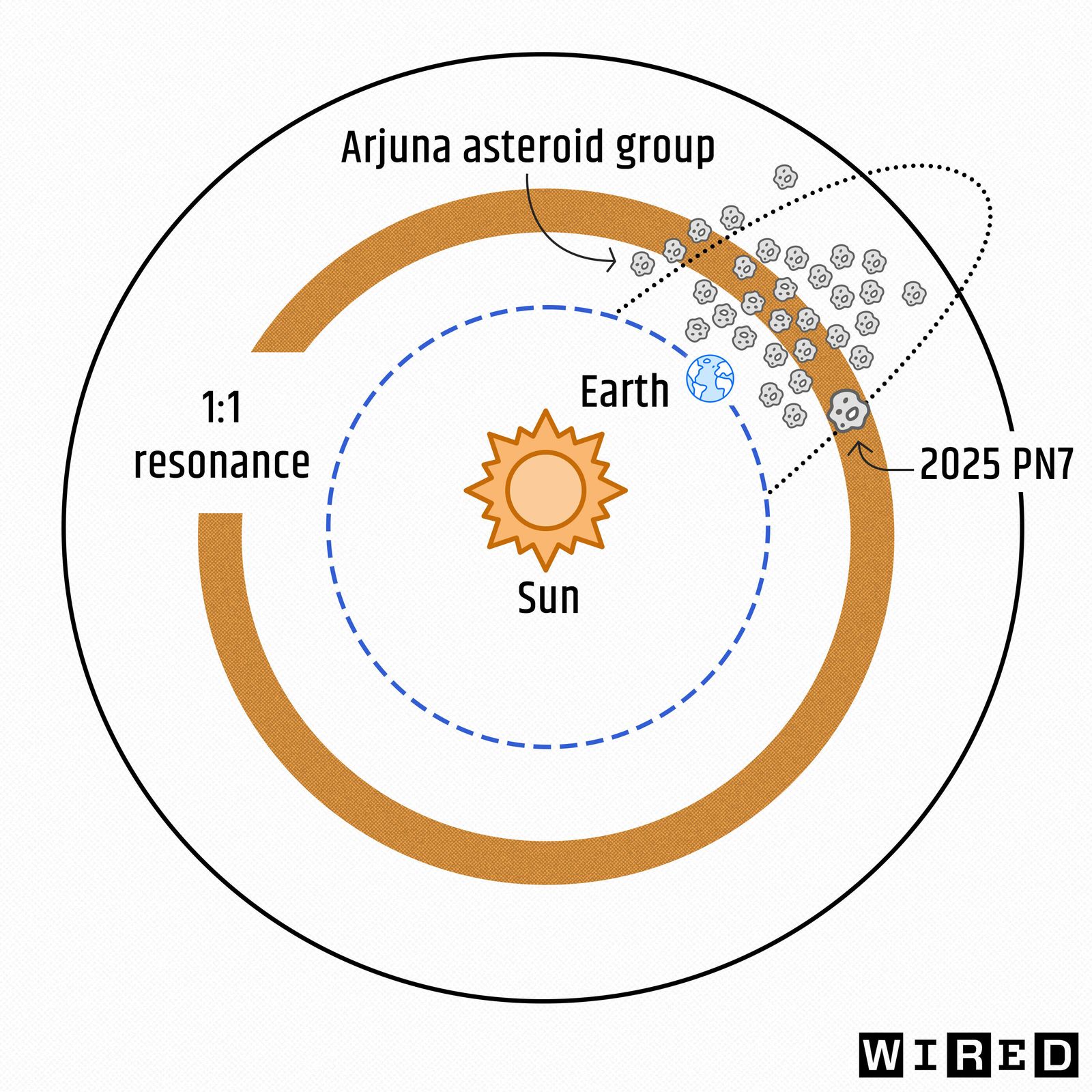
The Earth has just added its seventh confirmed quasi-lunar moon. It is 2025 PN7, a small Apollo-type asteroid detected in August solely by its brightness, thanks to the Hawaiian Pan-STARRS 1 telescope.

After analyzing its trajectory, scientists concluded that the object maintains a 1:1 resonance with the Earth. In other words, it orbits the sun at the same time as our planet. From a distant perspective, this synchronicity makes it look as if the Earth is accompanied by a tiny asteroid—as if it had an additional moon.

Unlike the moon, quasi-lunar moons are not gravitationally bound to the Earth. They are ephemeral companions, in cosmological terms, following their own path around

→ Continue reading at Wired - Science

More from author

Related posts

Advertisment

Latest posts

Author talks about Russia’s attempt to create a ‘sovereign internet’

For years, the Kremlin has been cracking down on the internet. It has banned Facebook and Instagram. Now, it's pushing a new app...

A conference just tested AI agents’ ability to do science

In a first, a scientific conference welcomed paper submissions from any area of science, but with one catch: AI had to do most of...

Napoleon’s retreating army may have been plagued by these microbes

Meghan Rosen is a senior writer who reports on the life sciences for Science News. She earned a Ph.D. in biochemistry and molecular...