
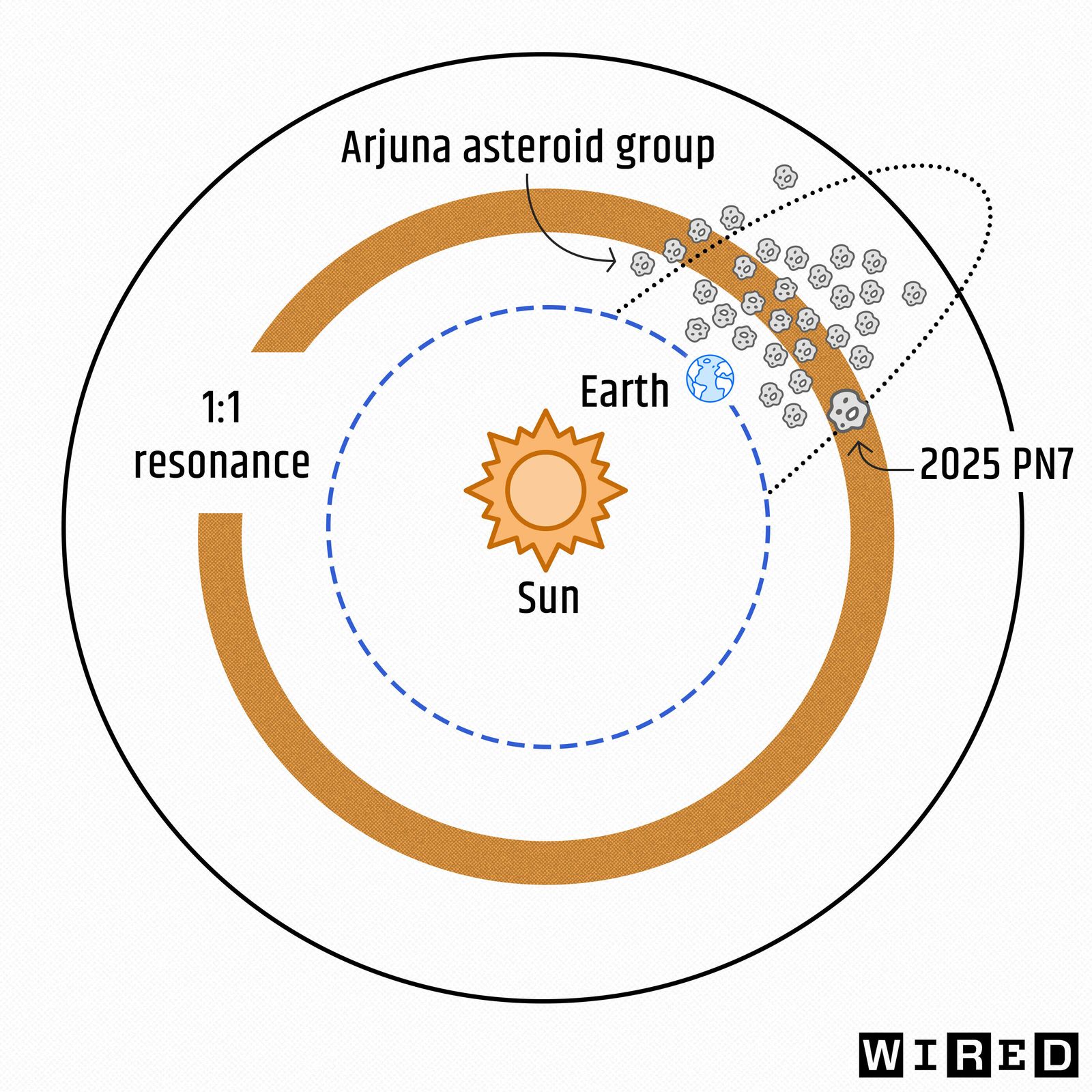
The Earth has just added its seventh confirmed quasi-lunar moon. It is 2025 PN7, a small Apollo-type asteroid detected in August solely by its brightness, thanks to the Hawaiian Pan-STARRS 1 telescope.
After analyzing its trajectory, scientists concluded that the object maintains a 1:1 resonance with the Earth. In other words, it orbits the sun at the same time as our planet. From a distant perspective, this synchronicity makes it look as if the Earth is accompanied by a tiny asteroid—as if it had an additional moon.
Unlike the moon, quasi-lunar moons are not gravitationally bound to the Earth. They are ephemeral companions, in cosmological terms, following their own path around