
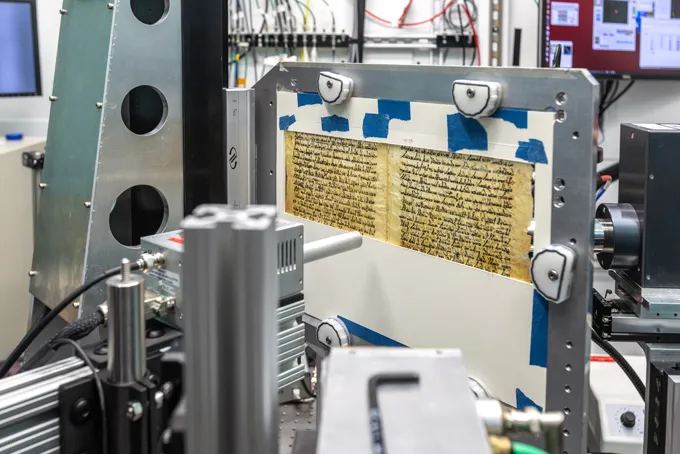
A Greek star catalog from the dawn of astronomy, revealed

Surrounded by metal pipes and tangles of cables, two researchers point to bright orange squiggles on a computer screen. The squiggles are a poem written in ancient Greek about heavenly phenomena, seen for the first time by human eyes in nearly a millennium and a half.

“There’s an appendix which includes coordinates of the stars discussed in the poem, and then little sketches of the star maps,” says Minhal Gardezi, a physicist at the University of Wisconsin–Madison.

#newsletter-helper svg { width: auto; fill: #f1563e; } #newsletter-helper { display: flex; border-top: 1px solid gray; padding-top: 10px; padding-left: 20px; margin-bottom: 10px; max-width: 900px; margin: auto } .zephr-form-container

→ Continue reading at Science News

More from author

Related posts

Advertisment

Latest posts

Placebo-related brain activity boosts antibody counts after a vaccine

Positive thinking may boost the body’s defenses against disease. Increasing activity in a brain region that controls motivation and expectation, specifically the brain’s reward...

Canadian humpback whales thrive with a little help from their friends

For one population of whales, teamwork makes the dream work. Decades after commercial whaling nearly drove them to extinction, a feeding behavior known as...

Microdosing for Depression Appears to Work About as Well as Drinking Coffee

About a decade ago, many media outlets—including WIRED—zeroed in on a weird trend at the intersection of mental health, drug science, and Silicon Valley...