
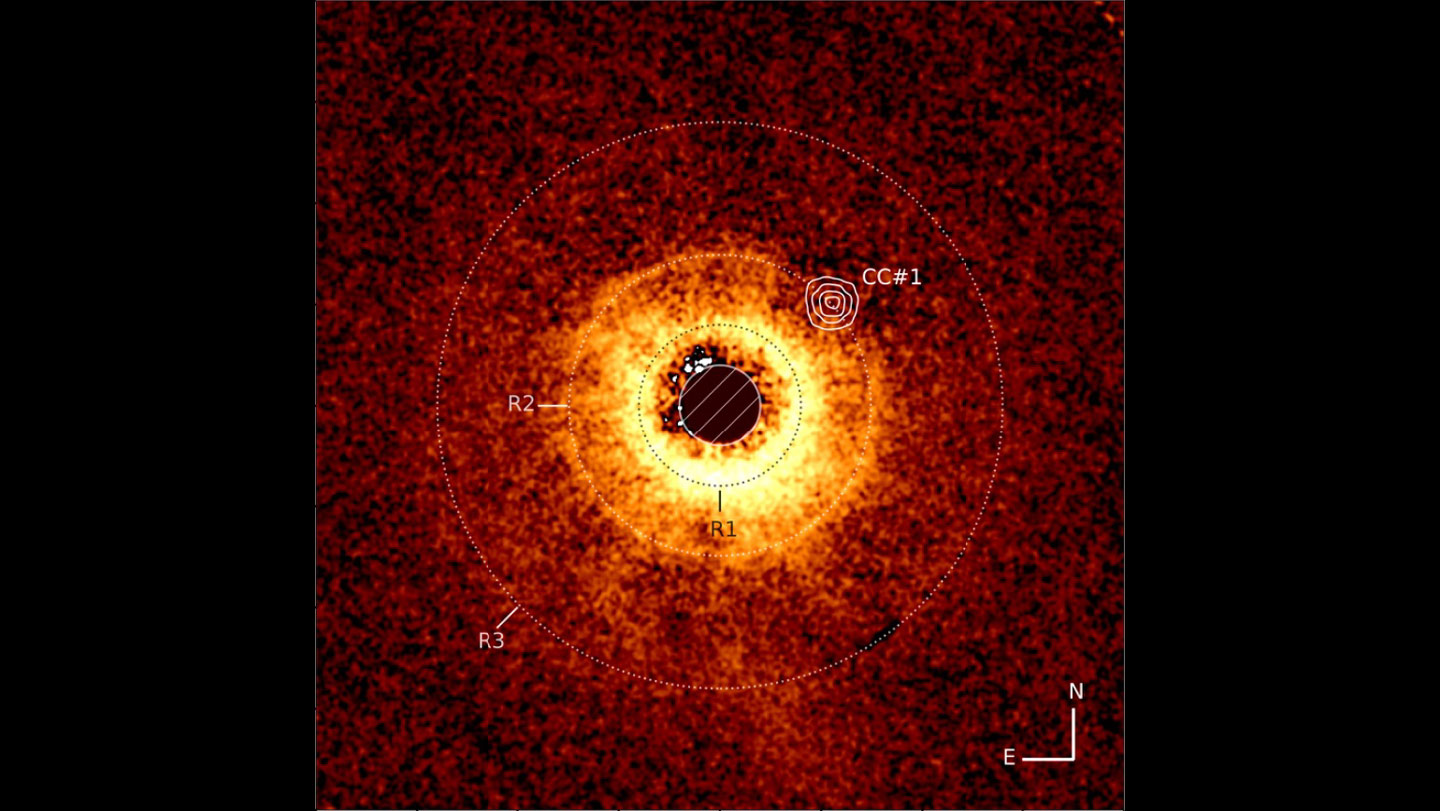
For the first time ever, the James Webb Space Telescope has discovered an exoplanet by directly imaging it. The newfound world has a mass roughly similar to Saturn and orbits inside the debris disk surrounding a young star named TWA 7, researchers report June 25 in Nature.
JWST has previously discovered more than 100 planets, mostly through the transit method, in which the telescope watches an exoplanet pass in front of its parent star, causing a brief dimming in the star’s light. Direct imaging — capturing a photo of a star-orbiting exoplanet — is a far more challenging task.
.email-conversion { border: 1px solid #ffcccb;