
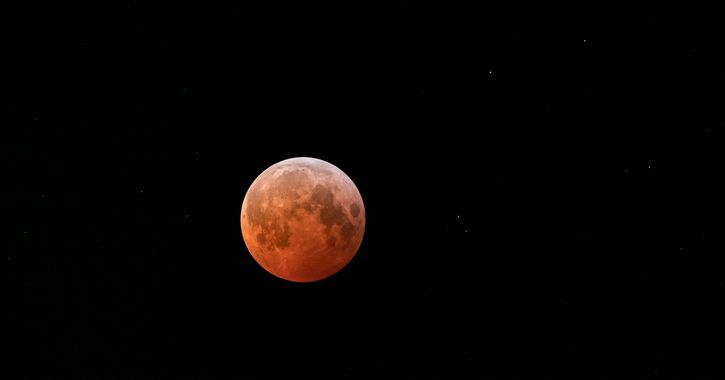
On the evening of September 7, the second (and final) total lunar eclipse of the year will take place—serving up the striking sight of a red “blood moon” in the sky across much of the world.
Total lunar eclipses occur when the Earth is positioned between the full moon and the sun, with the moon falling into the shadow of our planet. However, rather than disappearing into darkness, the shadowed moon instead turns red. This is because of a phenomenon called Rayleigh scattering.
Visible sunlight, while it appears white, is actually made up of lights of different colors that have different wavelengths, and these