
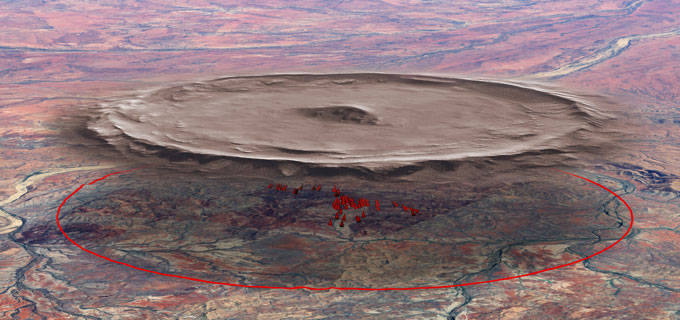
In a remote desert, scientists have discovered one of Earth’s oldest asteroid impacts. It dates to well over a billion years ago, to a time when our planet was inhabited solely by single-celled life.
The impact happened at what’s now called North Pole Dome in northwest Australia, its presence hidden within ragged, red rocks made of lava that erupted 3.47 billion years ago. Scattered here and there are sandstones that hold some of the planet’s oldest microbial fossils, which grew in bubbling hydrothermal pools and shallow seafloors. Those fossils and the impact could be crucial for studying past life on Mars, geologist Alec Brenner and colleagues report in the