
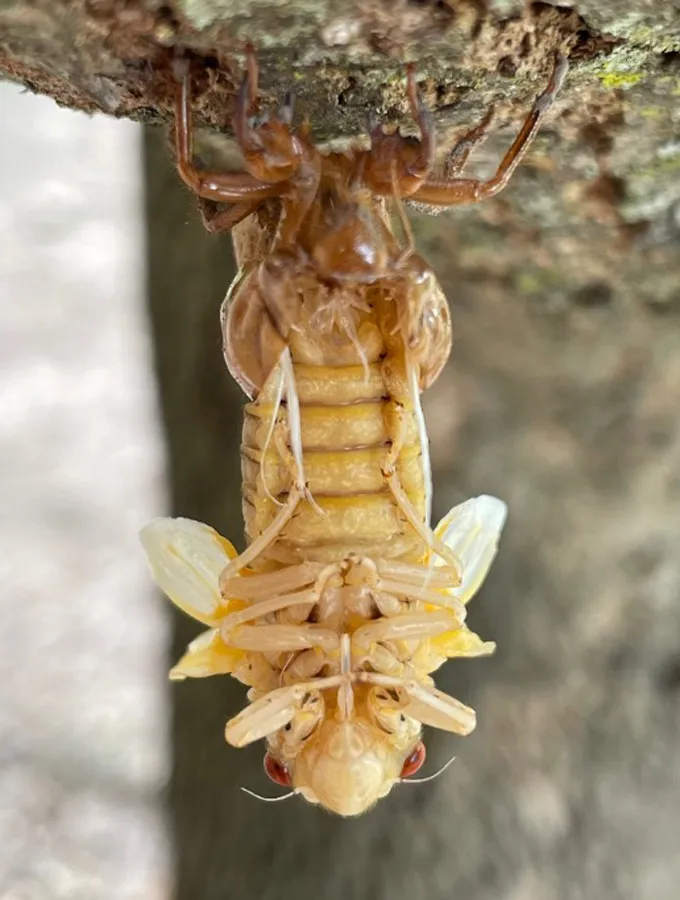
When periodical cicadas surface after years underground, they don’t grope blindly for trees. They head for the shadows, researchers report March 20 in the American Naturalist.
A detailed analysis of Brood XIII cicadas — which spend 17 years developing in subterranean tunnels before emerging all at once — found that newly arrived, wingless nymphs use darkness cues to move with striking precision toward tree trunks.
Across dozens of recorded trajectories, the insects deviated only slightly from the most direct route. “They just zoomed in, marching toward the trees,” says Martha Weiss, an evolutionary ecologist at Georgetown University in Washington, D.C.
This near-direct movement, Weiss and her colleagues found, hinges