
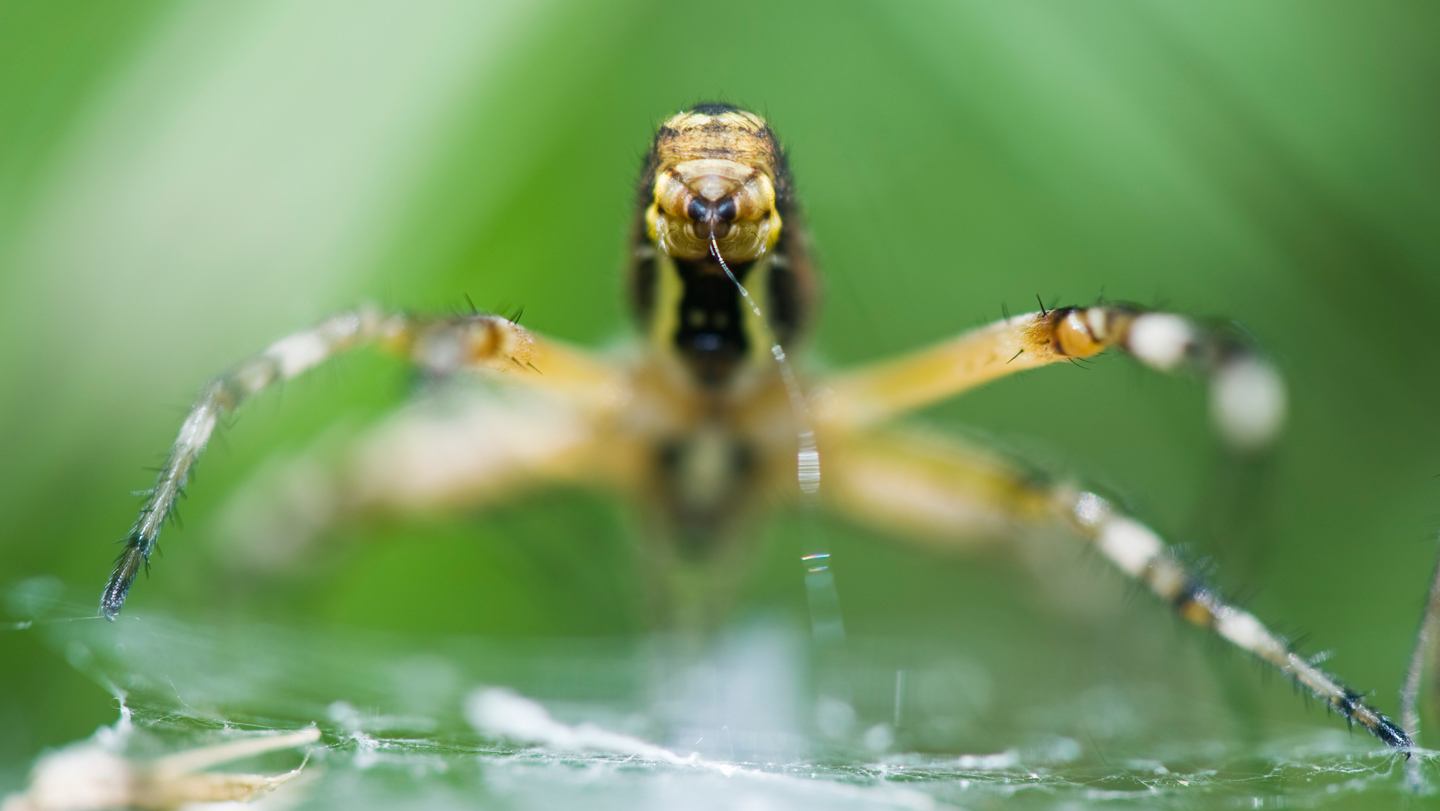
Spider silk-making organs evolved due to a 400-million-year-old genetic oops

Spiders’ ability to spin webs may be one consequence of a really big genetic mistake.

A close look at the genetics and development of spinnerets — spiders’ silk-making organs — reveals that an early arachnid doubled all of its DNA hundreds of millions of years ago. The findings, published January 14 in Science Advances, suggest key, doubled genes were responsible for the evolution of spinnerets. 

The specific genetic changes behind the evolution of these “biological factories” that make silk have remained elusive, says Shuqiang Li, an evolutionary developmental biologist at Anhui Normal University in Wuhu, China. One hypothesis was that spinnerets could have formed in the wake of a

→ Continue reading at Science News

More from author

Related posts

Advertisment

Latest posts

The brain’s response to a heart attack may worsen recovery

After a heart attack, the heart “talks” to the brain. And that conversation may make recovery worse. Shutting down nerve cells that send messages...

What does TikTok’s new ownership mean for users in the U.S.?

Since news about TikTok finalizing a deal to spin-off its U.S. operations became public, users have questioned what U.S. ownership of the app means...

In China, AI is no longer optional for some kids. It’s part of the curriculum

Li Zichen, a fifth grader at a Chinese public school, demonstrates a remote-controlled...