
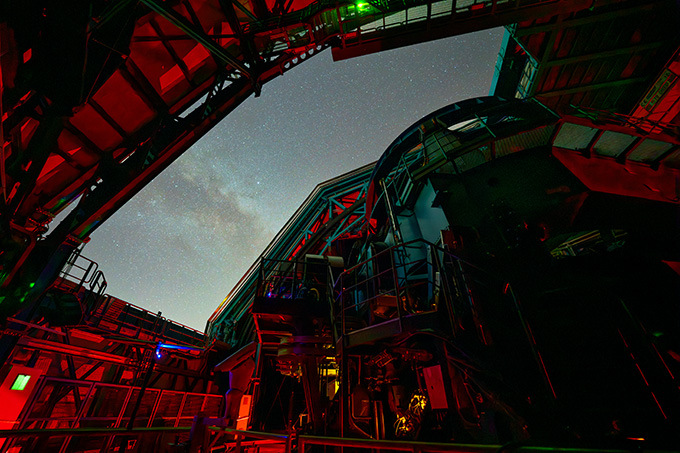
At 3 a.m. on a crisp May night in Chile, all seemed well with the world’s largest digital camera. Until it didn’t.
Inside the newly built Vera C. Rubin Observatory, site project scientist Sandrine Thomas was running tests when a flat line representing the camera’s temperature started to spike. “That looks bad,” she thought. She was right. Worried scientists quickly shut down the telescope.
I arrived a few hours later, jet-lagged but eager to get my first glimpse at a cutting-edge observatory that astronomers have been awaiting for more than 25 years.
Perched on a high, flat-topped mountain called Cerro Pachón, the Rubin Observatory was conceived back in the 1990s