
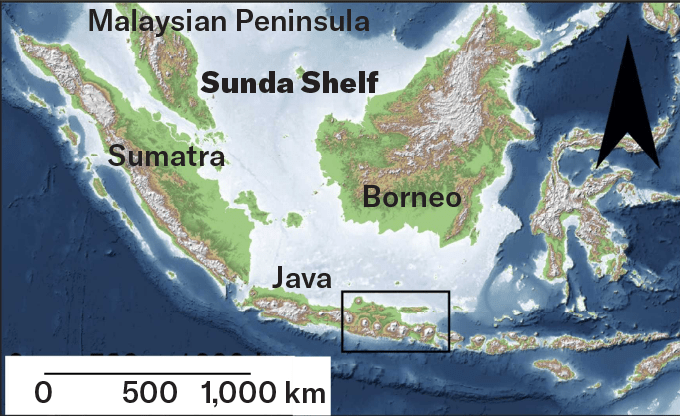
A construction project in Southeast Asia dredged up the remains of the extinct human relative Homo erectus from the seabed. The discovery, described in four studies in the June Quaternary Environments and Humans, reveals a lost landscape, long since submerged, where hominids lived by a river and hunted buffalo and turtles.
The first hominids known to have left Africa, about 1.8 million years ago, H. erectus traveled east to what is today the island of Java, Indonesia, and survived there until perhaps 108,000 years ago. Though archaeologists have made discoveries from submerged lands elsewhere, this is the first time hominid remains have been recovered from this region’s seabeds.