
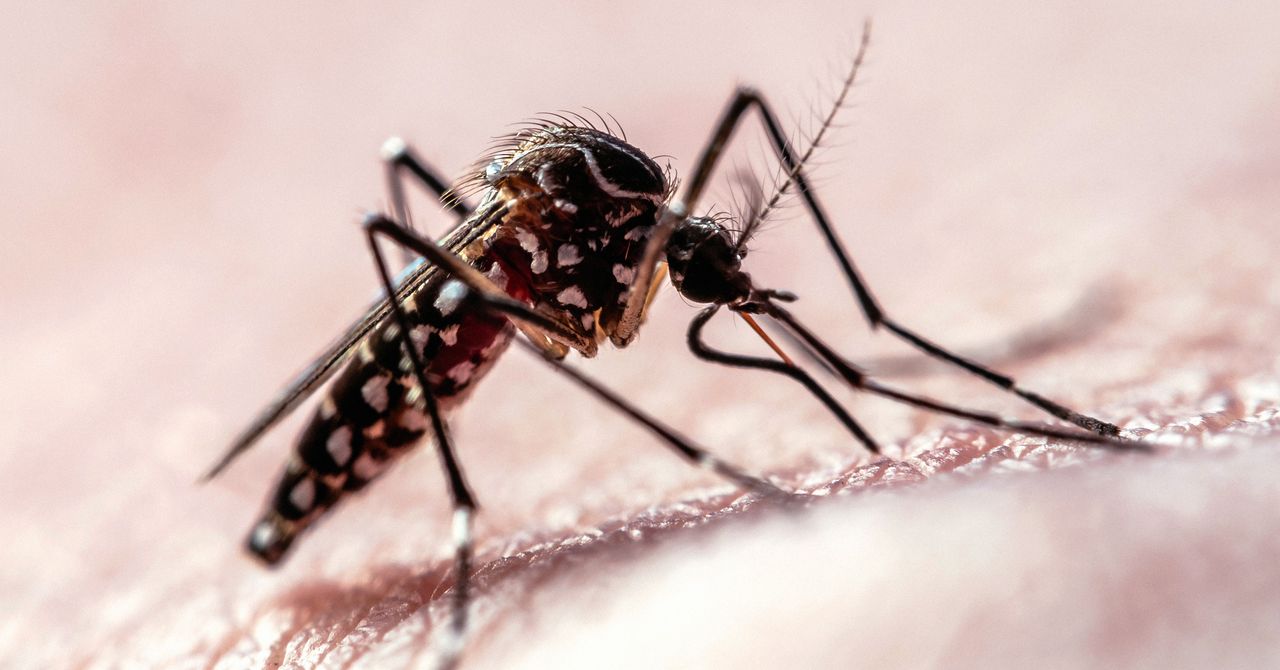
Infectious diseases borne by mosquitoes—such as malaria, dengue fever, and Zika fever—claim more than 770,000 lives worldwide each year. Understanding how mosquitoes find humans has long been a challenge in controlling the spread of these diseases. However, little has been known about how mosquitoes integrate multiple cues, including visual information and carbon dioxide, to approach their targets.
In this context, a research team led by the Georgia Institute of Technology and Massachusetts Institute of Technology has succeeded in automatically deriving a dynamic model governing mosquito flight by applying Bayesian inference statistical methods to a vast amount of data recording mosquito movements.
Bayesian inference is a statistical technique that probabilistically determines the