
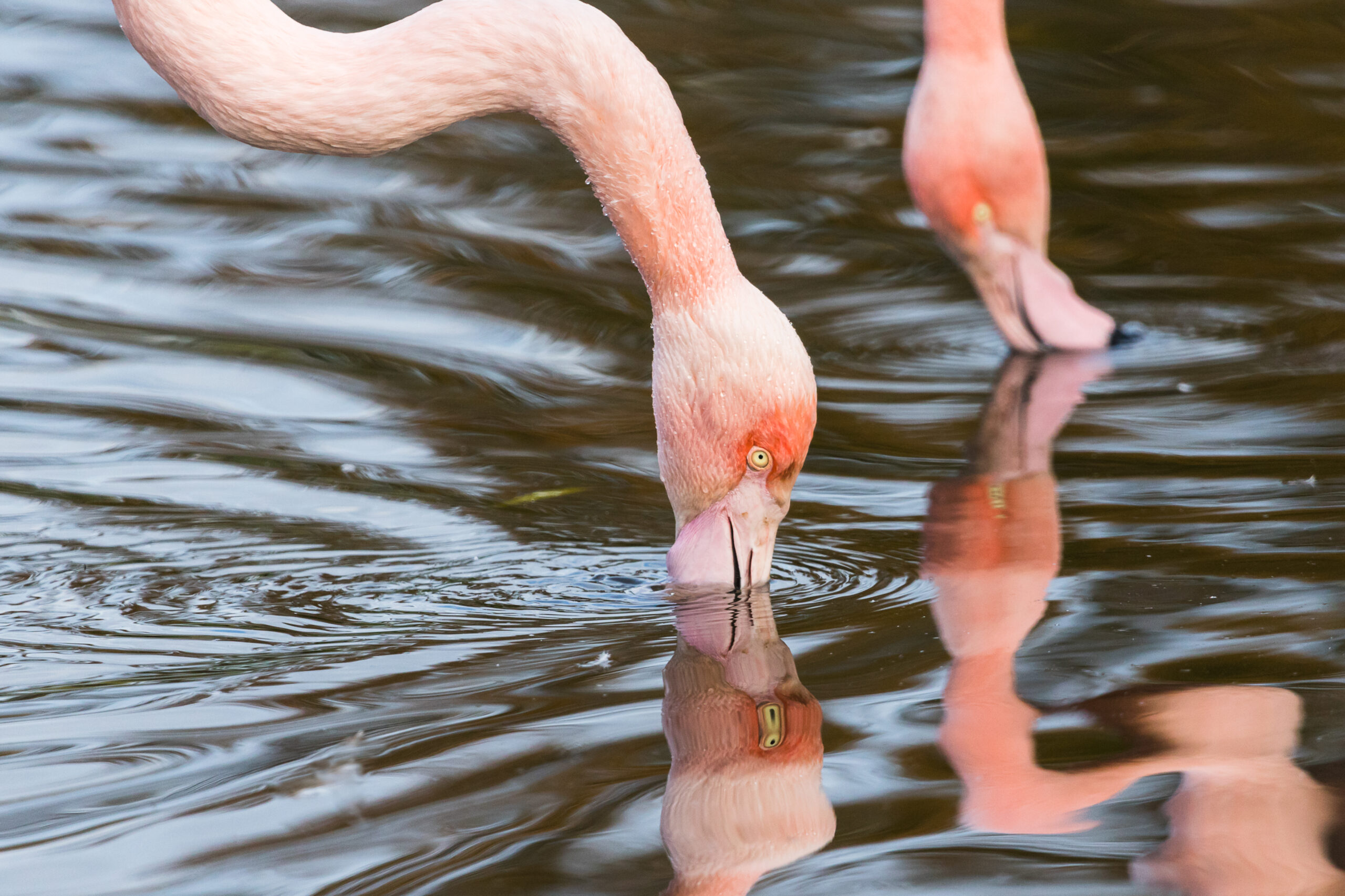
Tornado-generating beaks and whirlpool-stirring feet help flamingos transform shallow waters into shrimp-swirling death zones — corralling agile prey with the flair of a Las Vegas stage act and the efficiency of a Dyson vacuum.
That’s the takeaway from a study published May 12 in the Proceedings of the National Academy of Sciences that combined high-speed video, fluid dynamics experiments and 3-D-printed flamingo parts to reveal the mechanics behind the birds’ underwater feeding frenzies.
Through a combination of head flicks, beak pulses, surface skimming and stomping footwork, the pink predators whip up vortices that drive tiny crustaceans straight toward their filtering beaks.
.email-conversion { border: 1px