
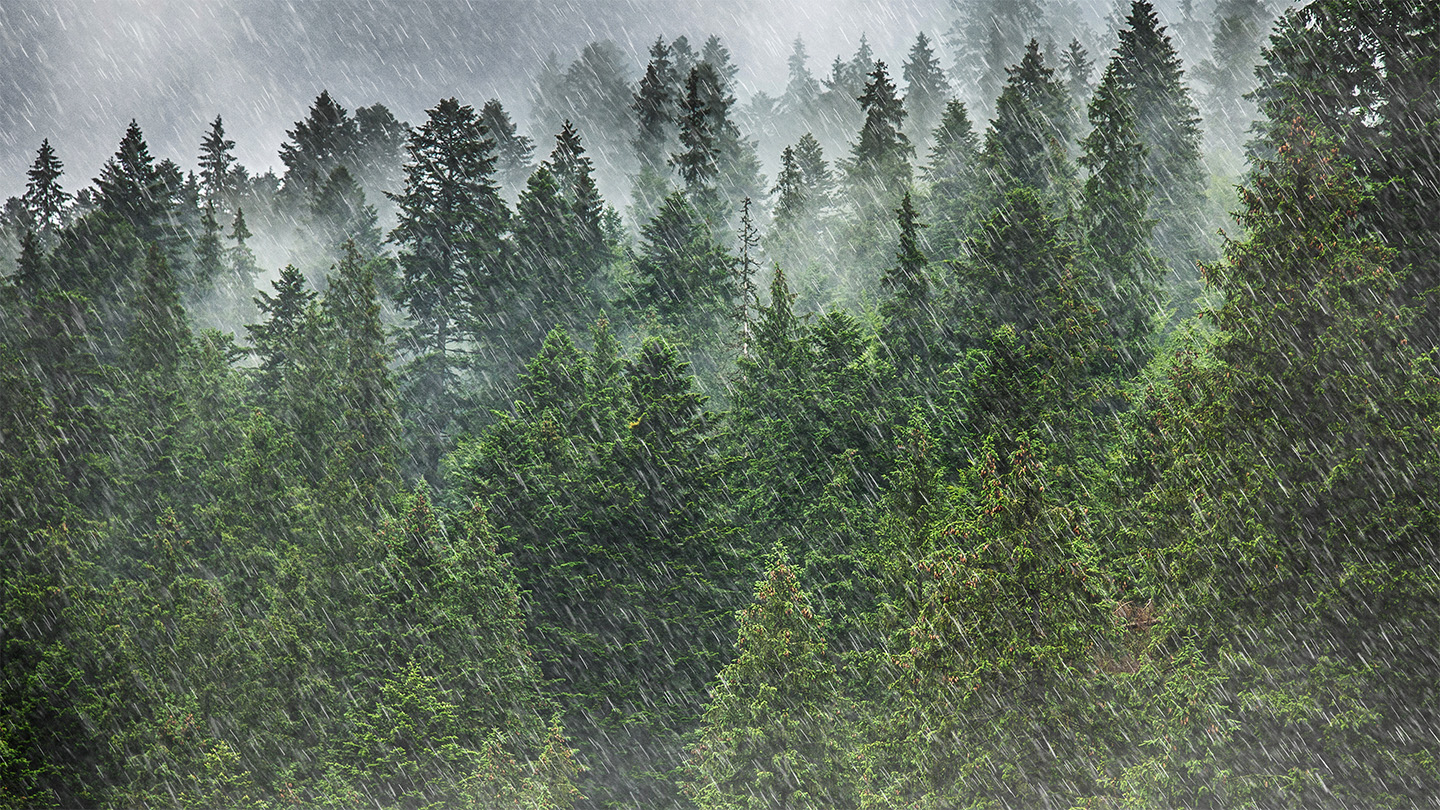
Sprinklings of life appear key to the recipe for rain.
Lofted flecks of organic material like bacteria, pollen and fungal spores play a profound role in regulating rainfall patterns, a new study suggests. These bioparticles can make up a major portion of all the particles that can seed rain in the sky, and their levels fluctuate in a daily cycle, researchers report May 5 in npj Climate and Atmospheric Science.
The study is the first to clearly show that the movements of bioparticles drive daily fluctuations of rainmaking particles more broadly. “This really has not been included in any [weather] models before,” says atmospheric scientist Athanasios Nenes of EPFL,