
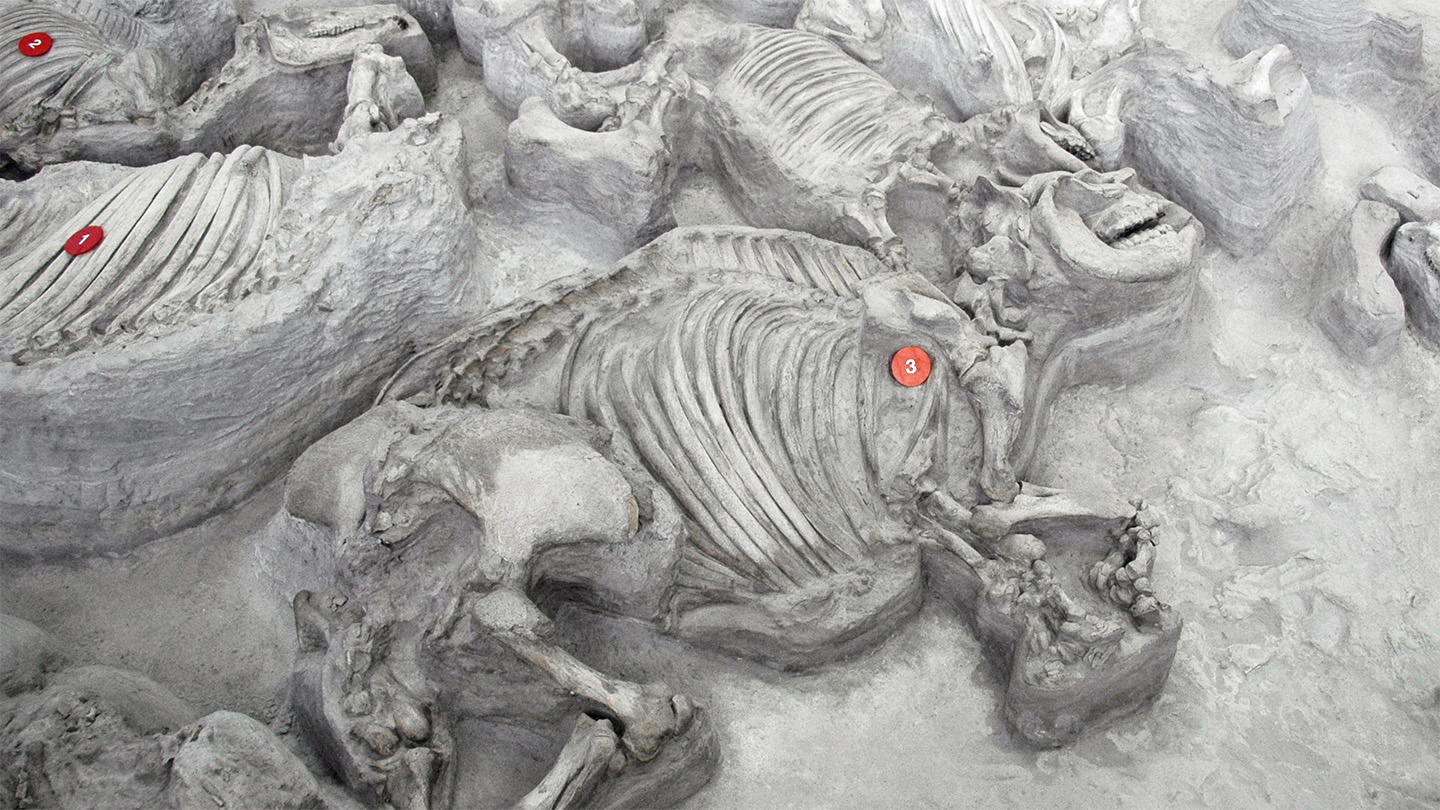
Millions of years ago in Nebraska, chunky, stumpy-legged rhinoceroses were party animals, crowding together in huge herds at watering holes and rivers.
Chemical signatures in the fossilized teeth of the extinct, corgi-shaped beasts suggest they didn’t roam widely, instead forming big, local herds unlike the more solitary rhinos of today, researchers report April 4 in Scientific Reports.
About 12 million years ago during the Miocene Epoch, the Yellowstone supervolcano erupted and covered much of North America in ash. Around a watering hole that eventually became Nebraska’s Ashfall Fossil Beds State Historical Park, about a foot of the debris fell on the landscape.
.email-conversion { border: