
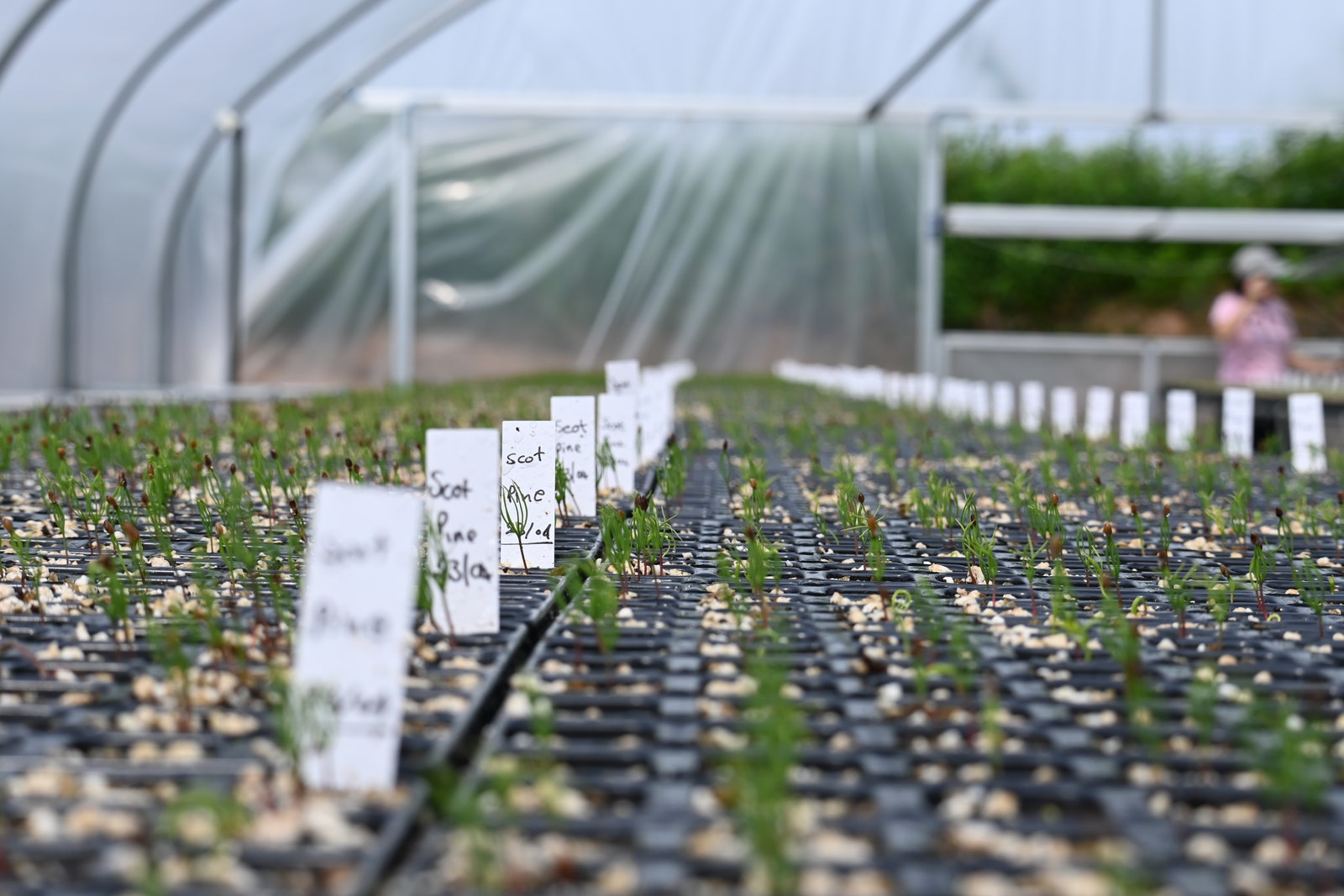
In a polytunnel on the Scottish island of Bute, thousands of spindly Scots pine seedlings are growing. On the surface, nothing could appear more commonplace than Scots pine growing in Scotland. But hidden within the soil of these particular seed trays, a symbiotic relationship is forming that could produce the first carbon-negative source of protein grown on a commercial scale.
The seedlings’ roots have been inoculated with ectomycorrhizal fungi, which provide the plants with soil nutrients and water in exchange for carbon, and produce protein-rich, edible mushrooms. When these seedlings are planted out in the spring, they will grow into a tree plantation that could sequester hundreds of kilos of