
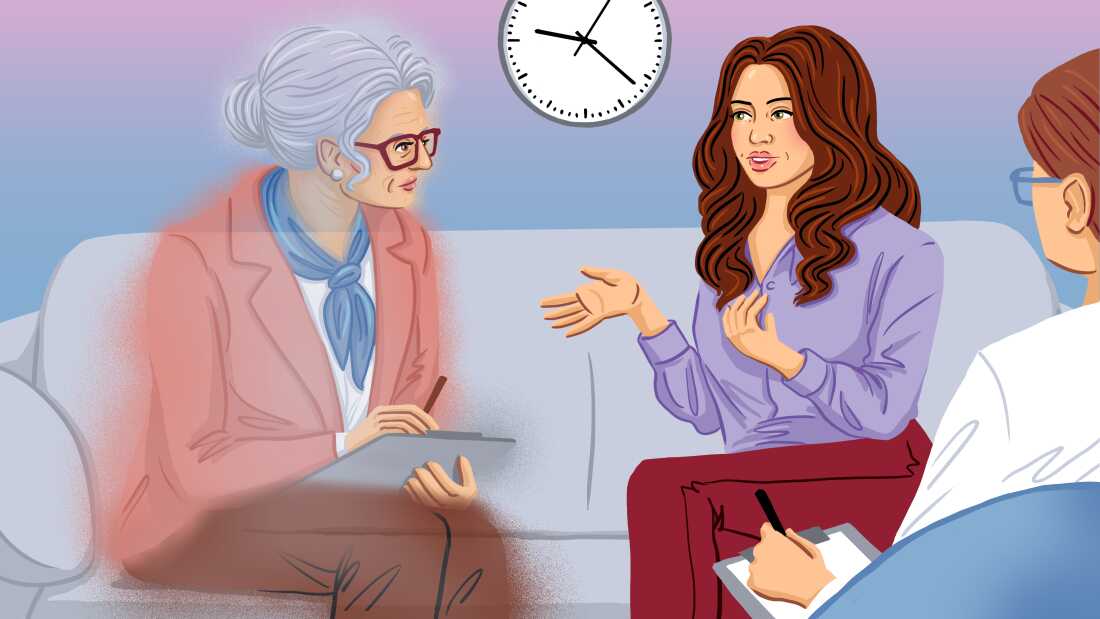
Jackie Lay / NPR
Kristen Johansson’s therapy ended with a single phone call.
For five years, she’d trusted the same counselor — through her mother’s death, a divorce and years of childhood trauma work. But when her therapist stopped taking insurance, Johansson’s $30 copay ballooned to $275 a session overnight. Even when her therapist offered a reduced rate, Johansson couldn’t afford it. The referrals she was given went nowhere.
“I was devastated,” she said.
Six months later, the 32-year-old mom is still without a human therapist. But she hears from a therapeutic voice every day — via ChatGPT, an app developed by Open AI. Johansson pays