
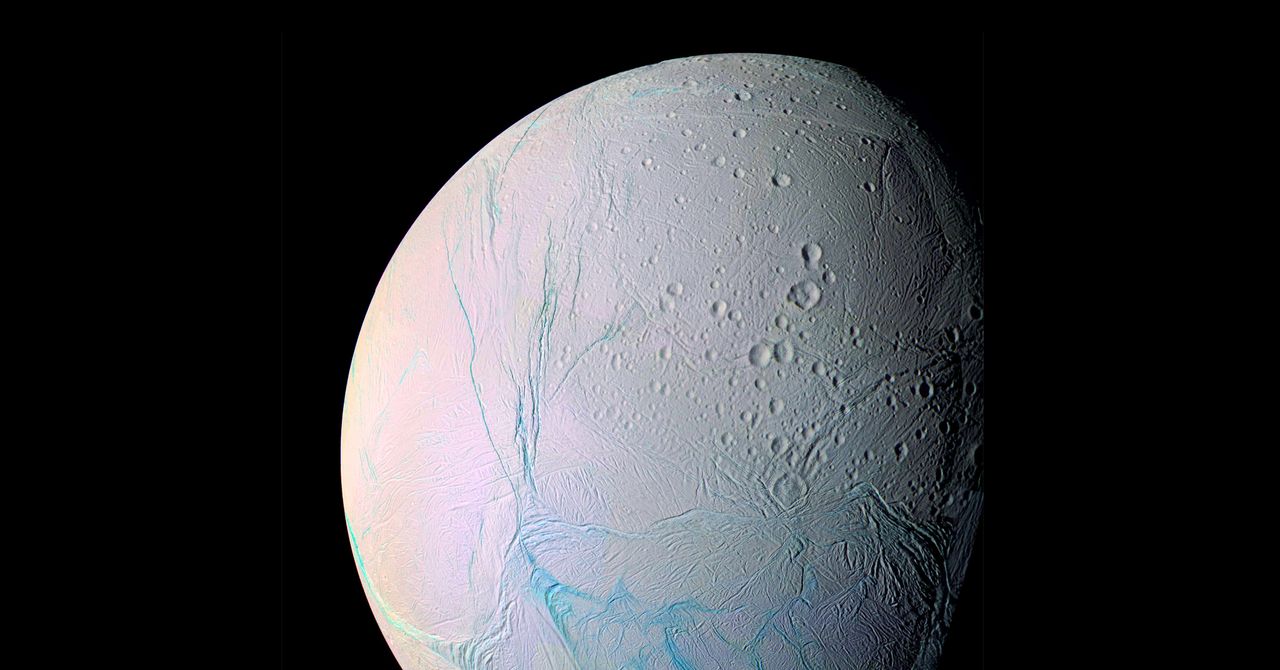
A recent study of Enceladus, one of Saturn’s moons, has detected several organic compounds that had never been recorded there before. The findings, published this month in Nature Astronomy, provide new clues about the interior chemical composition of this icy world, as well as new hope that it could harbor life.
The researchers analyzed data from the Cassini probe, which launched in 1997 and studied Saturn and its moons for years until its destruction in 2017. For Enceladus, Cassini gathered data from ice fragments forcefully ejected from the moon’s subsurface ocean up into space.
Enceladus is one of 274 bodies so far discovered in Saturn’s gravitational pull. It measures about 500