
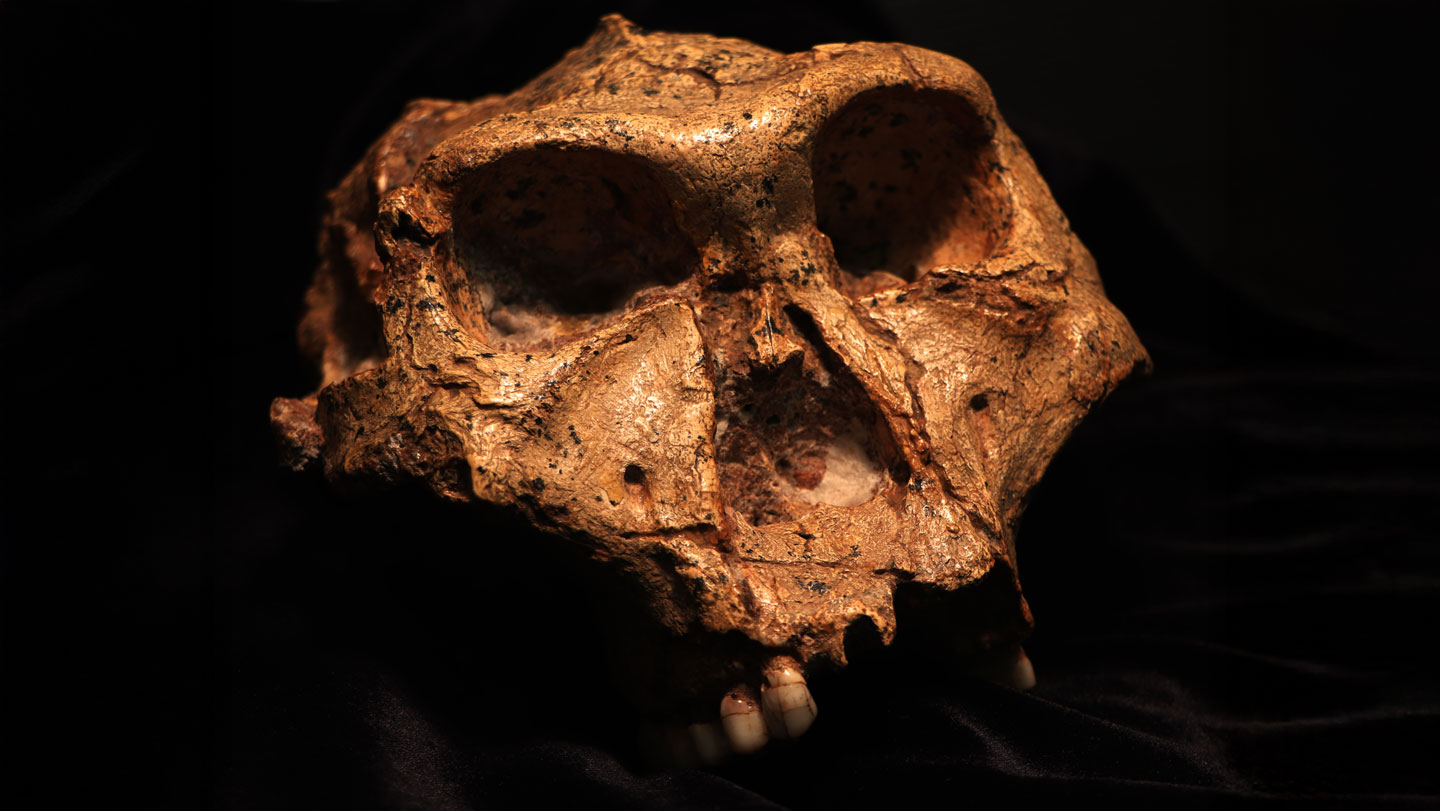
An ancient, distant human cousin from southern Africa called Paranthropus robustus has for the first time revealed molecular clues to its evolutionary status.
Protein sequences preserved in four partial P. robustus teeth from different individuals that lived roughly 2 million years ago indicate that larger and smaller fossils of this hominid species cannot always be classed as male or female, as previously thought, researchers report in the May 29 Science.
Sequences of a protein derived from a gene located only on the Y, or male, sex chromosome in present-day humans enabled the scientists to identify two teeth as having belonged to males, molecular biologist Palesa Madupe of the University