
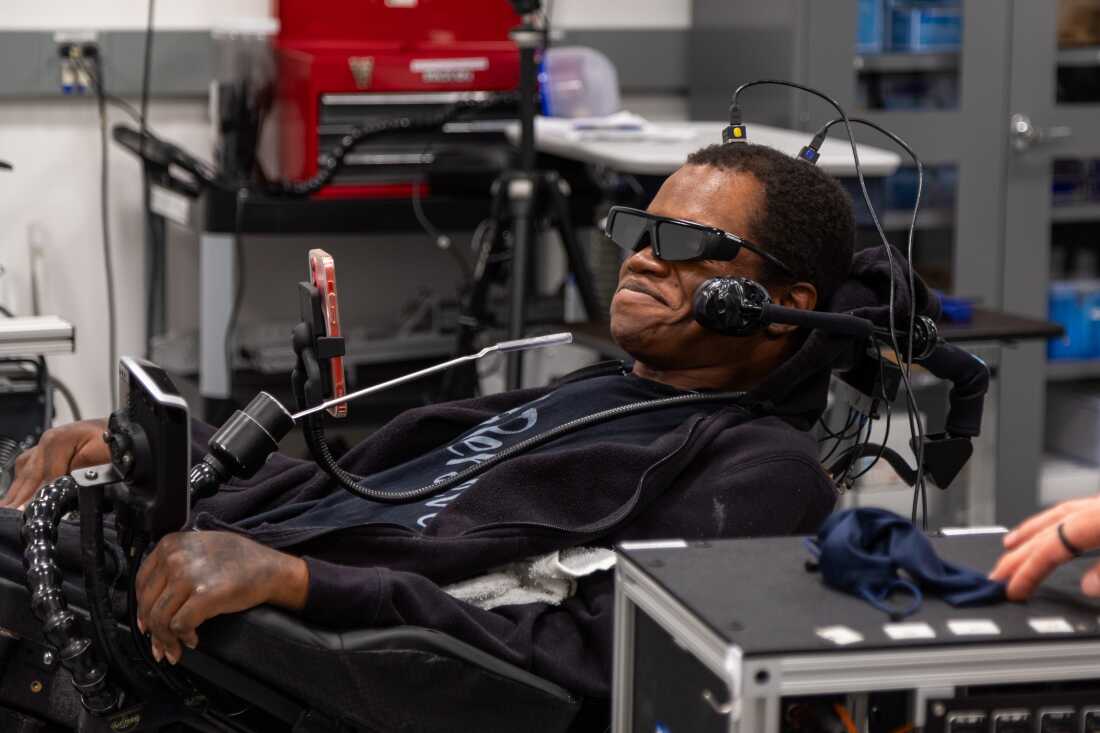
Phillip McKenzie, who was paralyzed from the neck down in a fall in 2012, uses a brain-computer interface developed by researchers at the University of Pittsburgh to navigate complex virtual tasks that simulate everyday activities, UPMC and Pitt Health Sciences
UPMC and Pitt Health Sciences
People who have lost the ability to move or speak may soon have a new option: surgically implanted devices that link the brain to a computer.
More than two decades after researchers first demonstrated that a person could move a computer cursor with their thoughts, several firms are poised to take the brain-computer interface (BCI)