
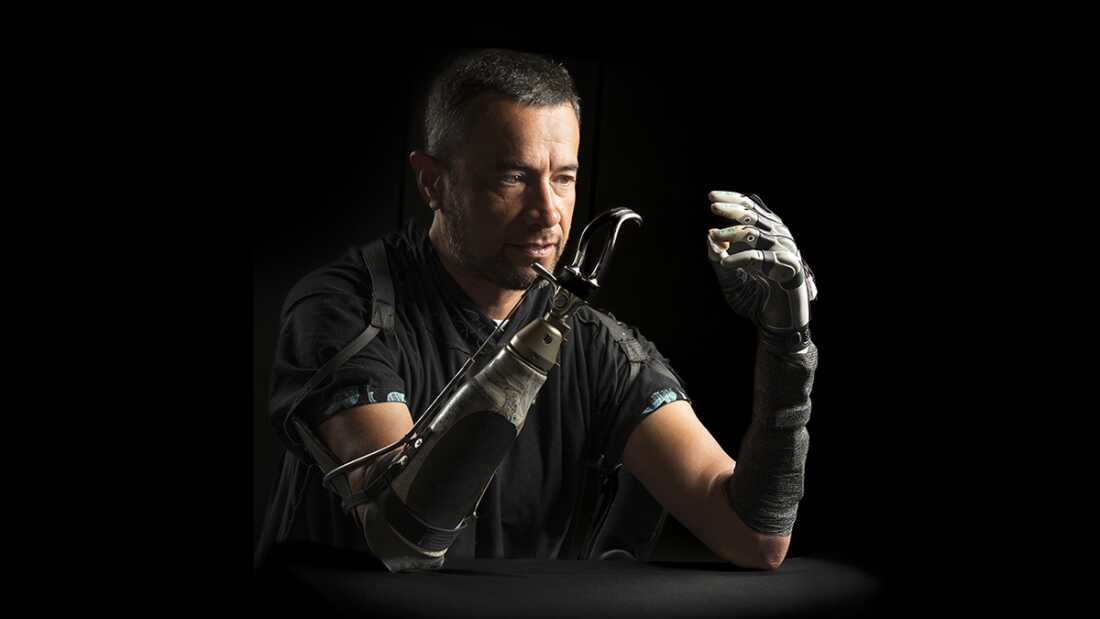
Samoana Matagi was one of the four participants in a study that tested the capabilities of a new bionic hand. Here, Matagi wears the bionic hand on one arm and a common prosthetic called a body-powered hook on the other. Dave Titensor/Utah NeuroRobotics Lab
Dave Titensor/Utah NeuroRobotics Lab
Researchers have built a prosthetic hand that, with the help of artificial intelligence, can act a lot more like a natural one.
The key is to have the hand recognize when the user wants to do something, then share control of the motions needed to complete the task.