
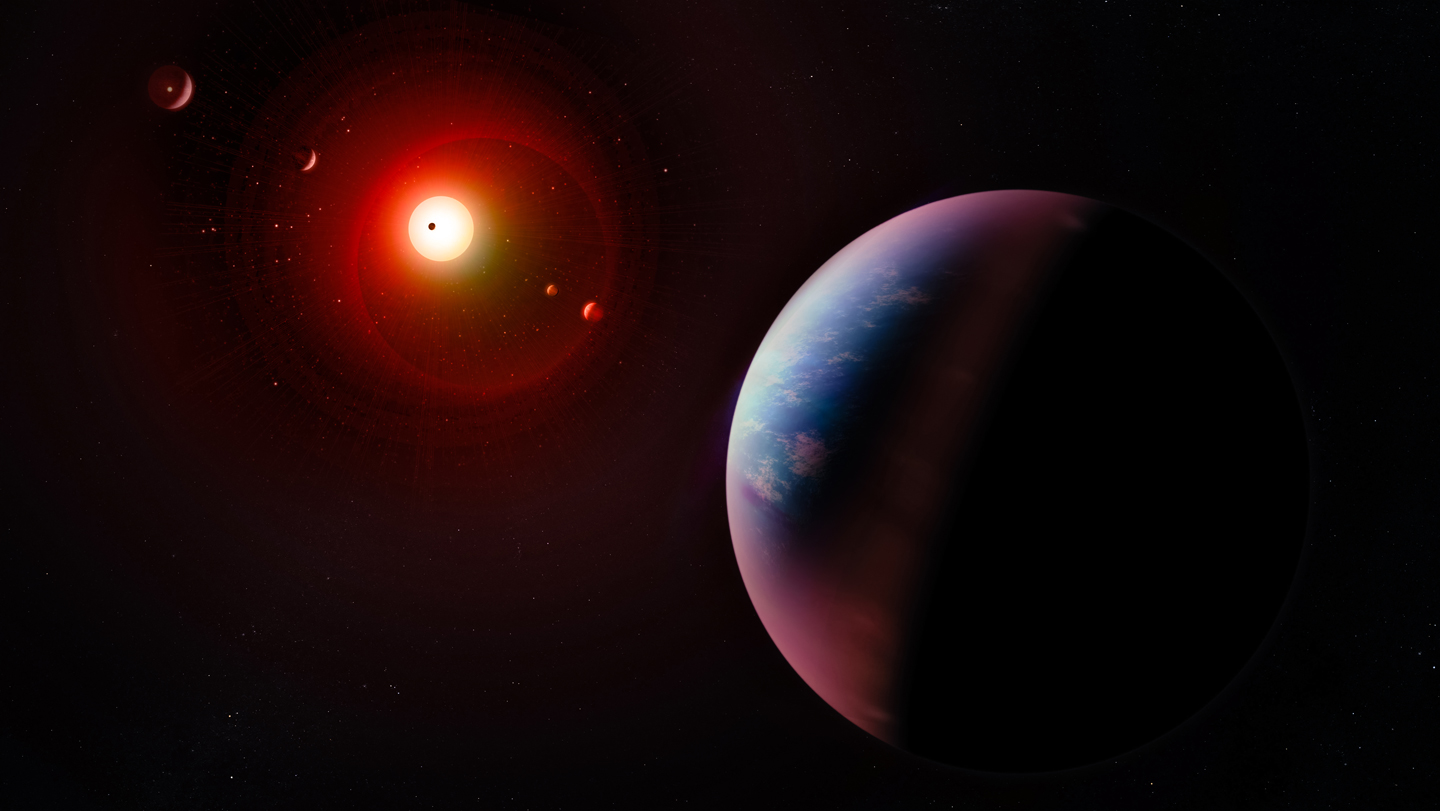
A chemical ‘Goldilocks zone’ may limit which planets can host life

Astronomers’ favorite fable just got a new twist. The “Goldilocks zone” — the region of space not too close and not too far from a star where liquid water could exist on a planet’s surface — now has a chemical equivalent. Researchers have found that a narrow range of planetary conditions are necessary to ensure the availability of bioessential nutrients like phosphorus and nitrogen.

The team simulated tens of thousands of exoplanets and found that fewer than 1 in 10 had Earthlike abundances of phosphorus and nitrogen. The results might help explain why life hasn’t yet been found beyond our home planet, planetary scientist Craig Walton and colleagues report

→ Continue reading at Science News

More from author

Related posts

Advertisment

Latest posts

A Titan collision may link Saturn’s tilt, its moon Hyperion and its rings

Two of Saturn’s satellites — its largest and one of its weirdest — may owe their current forms and orbits to a two-moon pileup...

Gayle King renews deal with CBS News, ending speculation about her exit

As CBS News plots an overhaul of its morning show, Gayle King has renewed her contract to remain at the network, a spokesperson...

Hundreds of studies have missed how much the oceans are rising

Hundreds of global and regional studies on sea level rise and coastal flooding may have underestimated sea levels by an average of 20 to...